Introduction
So yeah, GPT-5 is already being hyped like it’s going to rewrite the rules of the internet.
But if you’ve been around since GPT-3 or GPT-4, you already know the pattern. The biggest upgrades aren’t flashy demos. They’re the boring improvements that quietly save hours every week.
I’ve spent years building prompts, workflows, and tools around AI. And this post is about what actually matters with GPT-5 — not the hype loop.
What Is GPT-5?
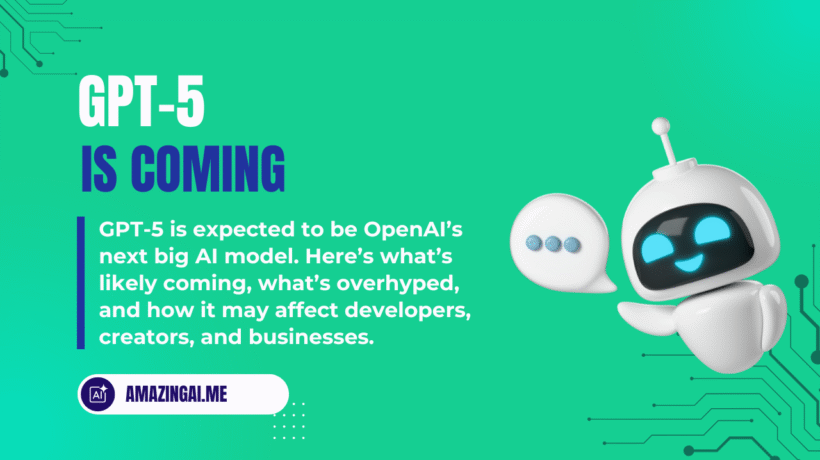
GPT-5 is the next-generation large language model expected from OpenAI.
There’s no official release date and no confirmed feature list yet.
But based on:
- how GPT-4 evolved into GPT-4o
- comments from OpenAI researchers
- and real-world user pain points
we can make some realistic predictions.
Expected GPT-5 Features (The Practical Stuff)
1. Better Long-Term Memory
Current AI memory feels like short-term politeness.
GPT-5 is expected to:
- remember user preferences more consistently
- maintain context across longer sessions
- stop re-asking things you’ve already explained
For power users and tool builders, this alone is a massive upgrade.
2. Fewer Hallucinations
AI still sounds confident even when it’s wrong.
GPT-5 will likely focus on:
- stronger fact verification
- clearer uncertainty when data is missing
- improved grounding in reliable sources
Not perfect accuracy — just fewer “that’s not right” moments.
3. Stronger Multimodal Reasoning
GPT-4o showed that text, image, and voice together actually work.
GPT-5 should:
- understand screenshots and UI layouts
- explain diagrams step by step
- reason across text, images, and audio in one flow
Think: uploading an error screenshot and getting a usable fix.
4. Larger Context Without Slowing Down
Long context is useless if responses lag.
GPT-5 is expected to:
- process very long documents
- stay consistent across them
- respond faster than current large-context models
This is especially useful for contracts, research papers, and large codebases.
What GPT-5 Probably Won’t Do
Let’s clear the noise.
- It won’t be AGI
- It won’t replace experienced engineers
- It won’t “think” like a human
And honestly, that’s fine. Most users just want reliability, not sci-fi intelligence.
How GPT-5 Could Affect Real Work
Developers
- cleaner refactoring
- better debugging from incomplete info
- fewer logic errors in generated code
Content Creators
- more consistent tone
- less prompt tweaking
- fewer rewrites
Founders & Marketers
- faster research
- improved first drafts
- clearer data summaries
Nothing magical. Just smoother workflows.
GPT-5 Pricing: What to Expect
If history repeats itself:
- free access will be limited
- paid tiers will unlock better performance
- API pricing will favor enterprise usage
Same model. Just scaled up.
Should You Prepare for GPT-5 Now?
Yes — but not by waiting.
Do this instead:
- improve your prompting habits
- document repeatable workflows
- learn how to evaluate AI output critically
Models change fast. Thinking skills don’t.
Conclusion
GPT-5 isn’t exciting because it’s smarter.
It’s exciting because it might finally be reliable enough to trust for daily work.
And for most people, that’s the upgrade that actually matters.
Frequently Asked Questions
When will GPT-5 be released?
There’s no confirmed release date. A staged rollout is more likely than a single public launch.
Will GPT-5 replace GPT-4?
Eventually yes, but GPT-4-level models will likely remain available for cost and stability reasons.
Will GPT-5 be available via API?
Almost certainly, with tiered pricing and usage limits.